
Quick Answer: What do I need to know about video marketing in 2026?
Video continues to be the winning option in 2026 because it drives results across social, search, and paid ads. Plus, teams can now produce more video faster without blowing up budgets. Short-form remains dominant (I’m sure you’ve heard that before), but creators, personalization, and performance video on CTV keep raising the bar for what a good short-form video actually looks and feels like. The elephant in the room, AI, can absolutely help you move faster, but your brand still needs clear creative direction and strong quality control. If you want one plan for 2026, build a repeatable pipeline: capture or generate good footage once, cut it into many formats, version it by audience, and ship consistently.
At-a-glance: the 2026 video trends to care about
| 2026 trend | What it changes | What to do next | How Visla helps |
|---|---|---|---|
| 1. Short-form stays the default | Your first 2 seconds matter more than your perfect intro | Build repeatable series and hooks | Record fast, edit by transcript, export vertical and square |
| 2. Creator and UGC become the “house style” | Polished brand spots lose to relatable, real video | Turn customers and teammates into storytellers | Screen and camera recording, quick trimming, simple review loops |
| 3. AI turns into your production baseline | Teams ship more video, and quality becomes the differentiator | Use AI for speed, keep humans for taste | AI Video Generator + AI Video Editor + B-roll suggestions |
| 4. Personalization and localization scale up | One message no longer fits every audience | Version video by segment, region, and language | AI Avatars, voice cloning, and translation workflows |
| 5. Paid video shifts beyond social | CTV, retail media, and social all compete for your ad budget | Build a “variant factory” for creative testing | Brand kit, multi-format exports, and API automation |
1. Short-form video remains the king

Short-form keeps winning because it fits how people actually browse. Viewers snack on video between meetings, while commuting, and while they doomscroll before bed. In 2026, you’ll see the best teams treat short-form like a product, not a one-off post.
What the data says (and how to use it):
- 71% of marketers think that short-form videos that land in the roughly 30 seconds to 2 minutes range perform the best.
- 63% of consumers say they prefer short video when they want to learn about a product or service.
- Platforms keep pouring fuel on the fire, and YouTube Shorts and TikTok pull in absolutely absurd views every day.
What to do in 2026
Build repeatable series, not random posts. A “series” makes it easier to create, easier to measure, and easier for viewers to recognize.
Here are a few reliable series templates:
- One problem, one fix: 30 to 45 seconds, one clear takeaway.
- Mini demo: 45 to 90 seconds, show the product in motion.
- Myth vs reality: 30 seconds, fast pattern interrupt.
- Before/after: 15 to 45 seconds, visual payoff.
Treat hooks like a KPI. Track 2-second views, 3-second views, and watch time by hook style. When a hook wins, reuse the structure.
How Visla helps
Visla makes short-form less painful because you can start with a clean recording and then cut quickly.
- Export the same project in multiple aspect ratios so you can ship 16:9, 1:1, and 9:16 without rebuilding everything.
- Edit with the Scene-Based Editor to trim fast and keep pacing tight.
2. Creator and UGC video becomes the baseline for trust and attention
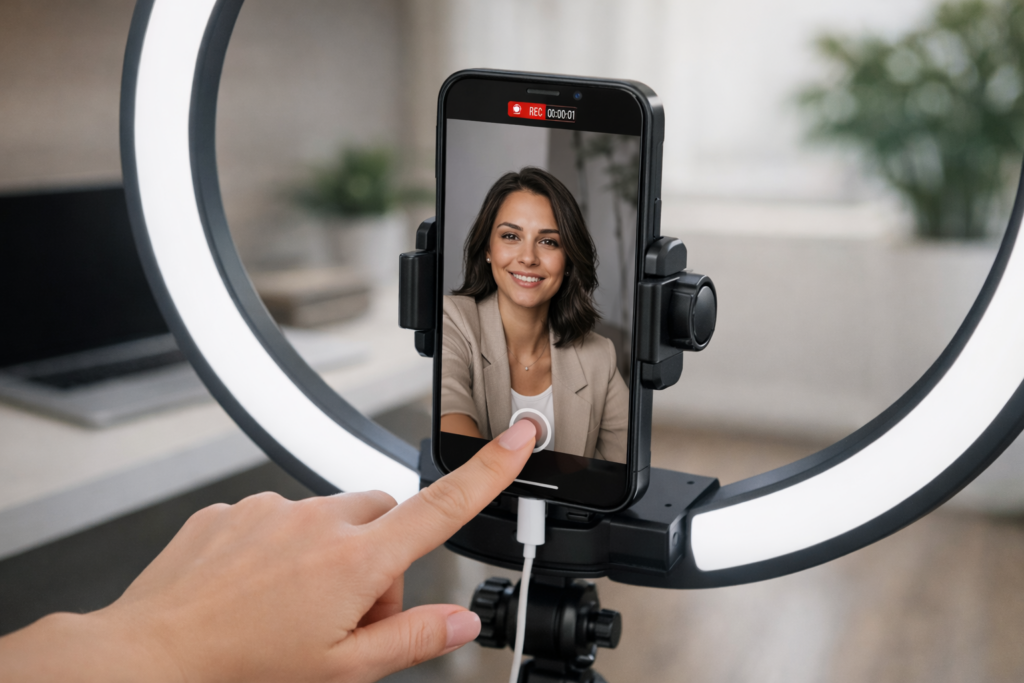
In 2026, audiences keep rewarding videos that feel like a person made them for other people. That doesn’t mean you should abandon production value, but it does mean you should stop overproducing everything.
Creator-style video works because it looks native in feeds. It also solves a business problem: you can create more content when you don’t need everything to look perfect.
What to do in 2026
Build a simple “UGC pipeline.” You don’t need a complicated program. You need a repeatable process.
- Pick 3 content prompts you can reuse every week (pain point, outcome, objection).
- Collect raw footage from customers, creators, and employees.
- Standardize the edit style so everything still feels on-brand.
- Recycle winners into paid ads, landing pages, and email.
Use testimonials like performance assets. A great testimonial does double duty. It builds trust in organic channels and drives conversion when you place it next to a CTA.
How Visla helps
Visla supports the messy reality of UGC.
- Keep the editing lightweight with Scene-Based Editing, automatic captions, and simple text and graphic overlays so creators don’t need pro tools.
- Use screen recording and camera recording to capture product moments, walkthroughs, and reaction-style clips.
3. AI-assisted video production becomes normal, but you still need good judgement

In 2026, you’ll rarely find a team that “doesn’t use AI.” Teams use AI to draft scripts, generate B-roll ideas, speed up edits, and create variations at scale. The upside matters, but the downside matters more: audiences can smell generic content instantly.
If you want AI to help your marketing, you need three things:
- A point of view so your video doesn’t sound like everyone else.
- A quality bar so you don’t publish content that looks like a template.
- Refined taste so you can tell the difference between good and bad AI content.
What to do in 2026
Use AI for the boring parts first. Let AI handle drafts, trims, cleanup, and formatting. Keep brand voice, creative direction, and final decisions in human hands.
Create a “quality checklist” for every AI-assisted video.
- Does the video say one clear thing?
- Does it show proof, not just claims?
- Does it match your brand tone?
- Does it avoid stock-looking clichés?
How Visla helps
Visla gives you AI speed without forcing you into a generic output.
- Start with Visla’s AI Video Agent when you need a first draft from an idea, script, webpage, PDF/PPT, existing footage or audio, and more
- Use integrated models like Veo 3.1 and Sora 2 Pro to generate AI footage.
- Use the AI Video Editor to clean up filler words, awkward pauses, silent ends, and more.
4. Personalization and localization scale up with avatars, voice, and translation
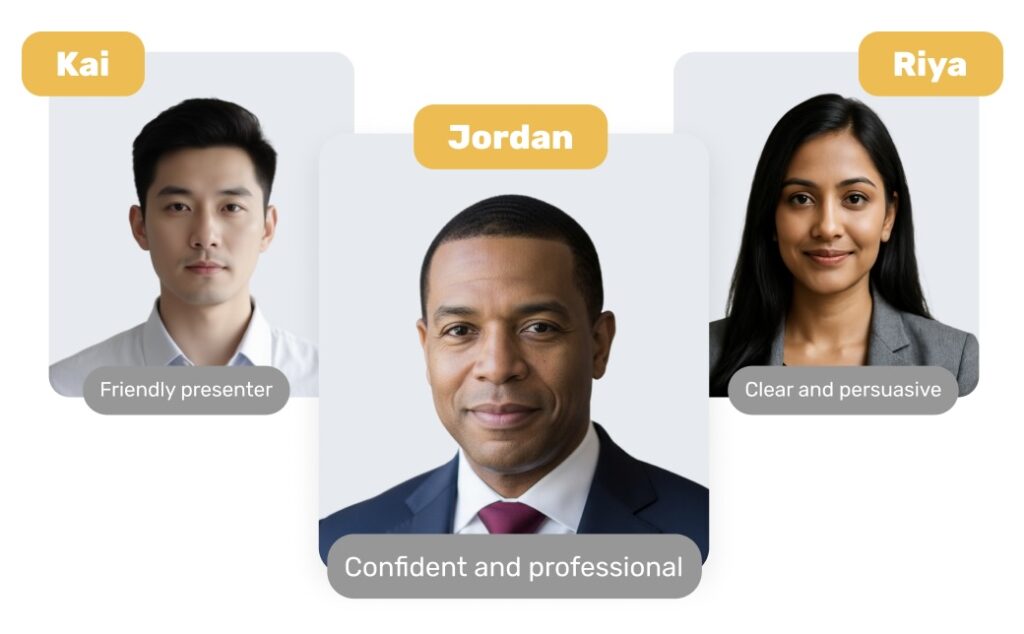
By 2026, personalization won’t mean “Hi {FirstName}” in an email. It’ll mean video variants built for a segment, a role, a stage in the funnel, or a region. Teams that personalize well will feel more relevant, and relevance usually wins.
What to do in 2026
Start with 3 audience segments. Keep it simple: one segment per core use case.
- New users who need clarity
- Evaluators who need proof
- Existing customers who need wins
Then version the same base video:
- Change the opener.
- Swap 1 example.
- Match the CTA to the segment.
Localize your top performers first. Don’t translate everything. Translate what already works.
How Visla helps
Visla makes personalization practical.
- Translate and re-voice videos to reach new audiences faster, while keeping the workflow inside one platform.
- Create consistent on-camera delivery with AI Avatars when you need a presenter without filming.
- Keep your voice consistent with voice cloning so the video still sounds like “you.”
5. Paid video expands across social, CTV, and retail media
Paid video keeps growing because it works, but the playbook changes fast. In 2026, brands spread budget across social video, online video, and connected TV, and they keep pushing toward performance KPIs.
This shift creates one core requirement: you need more creative variants. Platforms optimize delivery better than ever, but they still need creative input. If you only ship one ad, you cap your results.
What to do in 2026
Build a creative testing system you can run every month.
- 3 hooks (problem, outcome, contrarian take)
- 2 lengths (15 seconds, 30 to 45 seconds)
- 2 CTAs (soft, hard)
That simple matrix already gives you 12 variants. You don’t need 100 ads. You need a system that keeps learning.
Design for placement on day one. You’ll lose time when you treat vertical as an afterthought.
How Visla helps
Visla works well as a “variant factory.”
- The AI Video Agent can create videos fast, allowing easy iteration on ideas.
- Start with one master project, then duplicate and tweak versions fast.
- Keep brand consistency with a brand kit, logos, and styling so variants still look cohesive.
A simple 2026 plan you can steal
If you only do one thing this year, do this: pick one recurring format, publish consistently, and build a pipeline that turns one recording into many videos.
Weekly workflow (lightweight, realistic):
- Record 15 to 30 minutes of raw footage.
- Cut 5 to 10 short clips.
- Publish 3, then turn 2 into ads.
- Save the best hook formats and reuse them next week.
When you run that loop for 8 to 12 weeks, you’ll stop guessing. You’ll know what works for your audience, and you’ll produce enough volume to prove it.
FAQ
For video marketing in 2026, a lot of marketers still see the sweet spot in the 30-seconds to 2-minutes range, because it holds attention without feeling like homework. When asked how they want to learn about a product or service, surveys show many people most prefer a short video. Measure hooks like you would a landing page headline by tracking early retention and watch time, then turn what wins into a repeatable series instead of one-off posts. If you are using Visla, you can trim quickly with scene-based editing and export the same project to 9:16, 1:1, and 16:9 to fit each channel.
Creator-style video and UGC are baseline in 2026 because audiences prefer quick, human-feeling videos from creators over polished spots in many markets. Start with three reusable prompts, collect raw clips from customers or teammates, and standardize a light edit package with consistent captions, framing, and pacing. IAB reporting also shows creator-economy ad spend has grown quickly and is projected to keep climbing, which is why more teams operationalize creator content instead of treating it like a side quest. Visla fits this workflow by making screen and camera capture easy, keeping edits lightweight, and speeding up review loops so you can publish consistently.
AI is now embedded in the video marketing stack, and industry outlooks expect AI-powered and more personalized advertising to be a major growth driver across digital formats. Use AI for speed first: draft scripts, suggest B-roll, clean up pauses, generate captions, and create format variants, then keep humans responsible for voice, examples, and final approvals. Before you ship, run a quality bar that forces specificity: one clear claim, on-screen proof, your brand tone, and zero generic filler. When you do need generated footage, treat it like stock with strict selection rules so it supports the message rather than becoming the message.
Personalization in 2026 is less about sprinkling a name and more about shipping variants built for a segment, role, funnel stage, or region. That matters because hyper-personalized advertising is expanding, raising the baseline expectation for relevance in paid and organic video. Start with three segments and version one master video by changing the opener, swapping one example, and matching the CTA, then let retention and conversion data tell you what to scale. Tools like Visla can keep this manageable with translation, re-voicing, avatars, and voice cloning inside one workflow so your team is not juggling five vendors.
Budgets are spreading beyond social because digital video is taking a bigger share of total TV and video spend, and connected TV is forecast to keep expanding through the late 2020s. etail media is growing fast too, which adds more video placements and pushes teams to tailor creative by channel and shopper context. That makes creative variety non-negotiable, since research on ad fatigue shows many people tune out repetitive ads when brands run the same creative over and over. A practical starting system is a 3×2×2 matrix (three hooks, two lengths, two CTAs) so you launch 12 variants, learn quickly, and scale the winners with a “variant factory” workflow.

May Horiuchi
May is a Content Specialist and AI Expert for Visla. She is an in-house expert on anything Visla and loves testing out different AI tools to figure out which ones are actually helpful and useful for content creators, businesses, and organizations.